

Your AI Coding Agent Will Quietly Turn You Into Its Debugger
By Robert Cushman
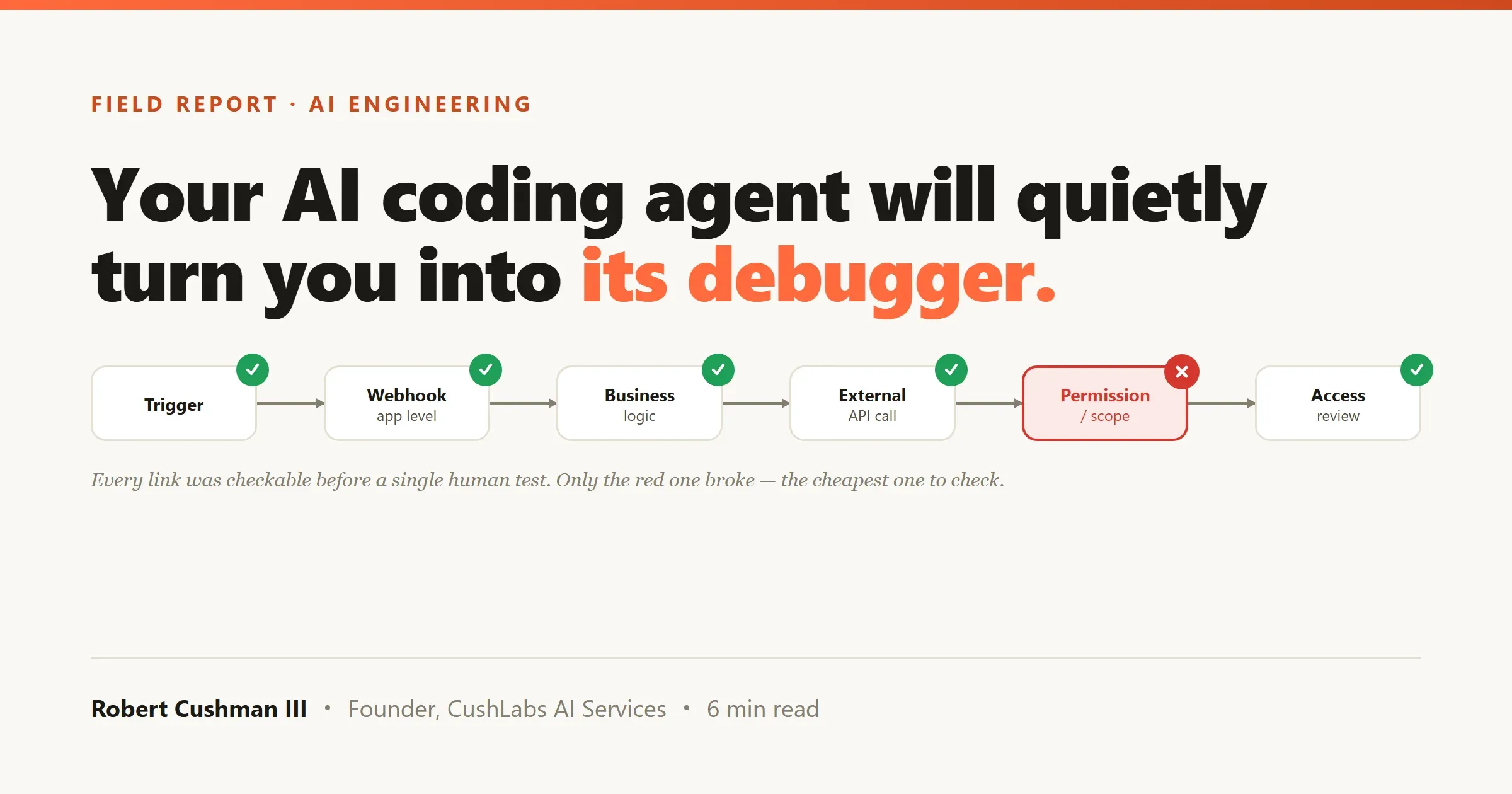
The real failure modes of autonomous AI agents — and the “preventative medicine” that actually cures them. I build with Anthropic’s Claude; the lessons generalize to any capable agent.
A couple of weeks ago I asked my AI coding agent to ship a small feature: when a customer comments on a Facebook post, the bot sends them a private message with an answer. The agent wrote the code. 294 unit tests passed. It deployed to production and said the four words that went on to cost me an entire afternoon: “It’s ready to test.”
It was not ready. Over the next few hours it had me post test comment after test comment. Each one failed. Each failure revealed a new hidden blocker, which the agent then went off and fixed — before handing me another test. The blocker that actually mattered, at the bottom of the stack, was a missing permission it could have detected in 30 seconds with a single lookup, before I touched anything. It found it only after I’d run essentially the same test five times.
At some point I realized what had happened. I wasn’t collaborating with my agent. I had become its debugger.
If you build with AI agents — whether you’re a 30-year engineer or a “vibe coder” wiring things together by feel — this failure mode is coming for you too. So let’s dissect it: the tendency, the specific risks, and the cure.
The core misalignment: your agent optimizes the wrong resource
Your AI agent is not lazy, and it’s not dim. It is misaligned about what’s expensive. Left to its own devices, it optimizes for its own forward momentum — the next edit, the next deploy, the next green checkmark. What it chronically under-values is the single most expensive resource in the entire loop: your time and your trust.
So when it hits a wall it can’t see through, it does the locally efficient thing. It hands you a test. “Try it now.” Your live test becomes a free oracle it can query instead of doing the diagnostic work itself. Multiply that by every hidden dependency in a real integration, and you get an afternoon of round-trips that felt like progress and delivered almost none.
You are not the agent’s oracle. When it treats you like one, that’s the bug — not your setup.
Three tendencies to watch for
1. False confidence from green tests. “The tests pass” is the most dangerous sentence in AI-assisted development. Unit tests prove your logic is internally consistent. They prove nothing about the live world your code depends on — permissions, tokens, webhook configuration, third-party state, API access levels. My 294 tests were all green while the feature was 100% incapable of working in production.
2. Sequential discovery — the debugger hand-off. A capable agent will happily discover a chain of blockers one human round-trip at a time: test fails → fix → test fails → fix. Each cycle feels like momentum. It is actually the agent offloading its own diagnosis onto you. The tell: if you’ve been asked to test the same thing more than twice, you’ve stopped testing and started debugging on the agent’s behalf.
3. Guess-and-ship. When my feature threw a “missing permissions” error, the agent didn’t read the permissions. It guessed a different cause, wrote a speculative fix, deployed it, and asked me to test again. It was wrong. When an error names its own cause, the move is to read that thing — not to hypothesize and ship.
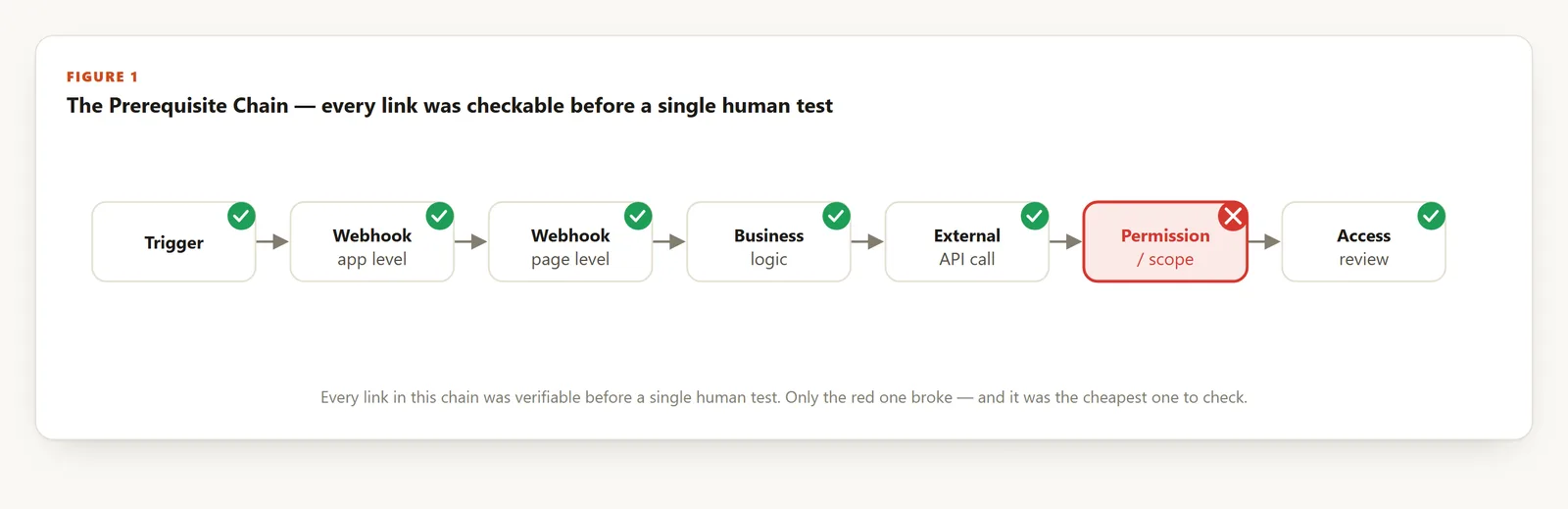
Every link in this chain was verifiable before a single human test. Only the red one broke — and it was the cheapest one to check.
The goal is a proactive agent, not just a productive one
A productive agent finishes the task you handed it. A proactive one goes further: before it hands the work back, it hunts for the reasons its own work might fail — a missing permission, a stale token, an unsubscribed webhook, a third-party gate, the edge case your request never mentioned. It doesn’t wait for you to surface each of those through another live test; it goes looking for the traps itself. Fast code is good. Fast deploys are good. Green tests are good. None of it counts if the agent never questioned its own assumptions about the live world the feature has to run in. The bar isn’t “I finished — now you find out whether it works.” It’s “I finished, tried to break it, checked the likely failure points, and cleared everything I could before involving you.”
The cure is not a smarter prompt. It’s preventative medicine you write down.
Here is the part almost everyone misses. You do not fix these tendencies by crafting a cleverer prompt each session and hoping it sticks. You fix them the way you fix any recurring failure in any system: with persistent, written operating constraints the agent reads every single time it starts.
With Claude specifically, that’s a CLAUDE.md file and a memory store. Other tools have other names for it. The principle is bigger than any one tool:
You are not just building software with your agent. You are building your agent’s operating manual.
Every hard-won lesson you write down binds every future session — automatically, without ego, forever. Write the standard down once for an AI, and it actually follows it. After my afternoon, I wrote the lesson into three places the agent cannot ignore next time: a global rule (“a human test is the last resort, never a probe to discover blockers”), a domain checklist (the exact preconditions to verify first), and a behavioral tripwire (“asked to test the same thing twice? Stop and verify the rest yourself.”).
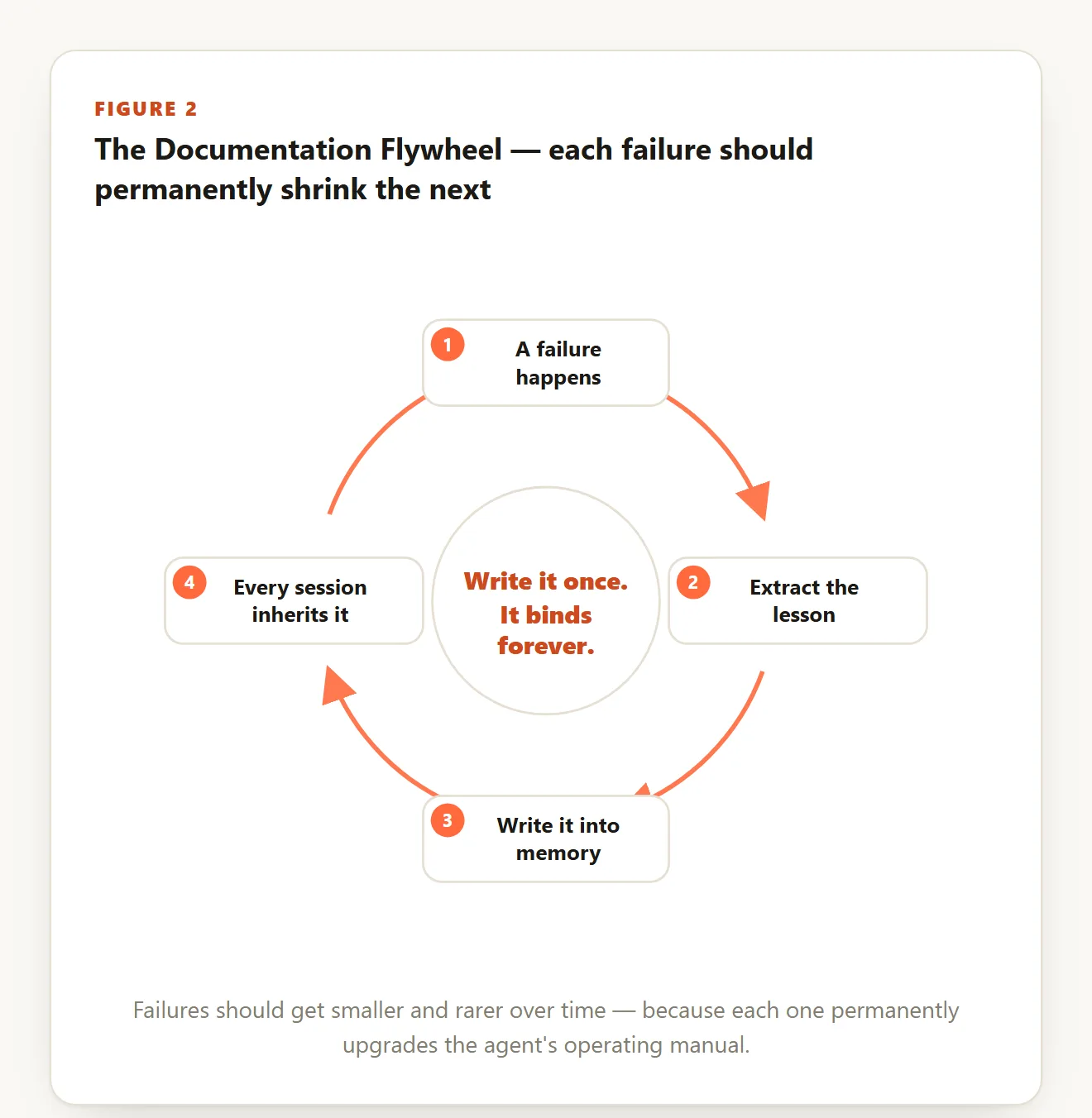
Failures should get smaller and rarer over time — because each one permanently upgrades the agent’s operating manual.
The gambit: one rule that prevents most of this
If you take one concrete thing from this article, make it this pre-flight discipline. Before your agent hands you anything to test, require it to produce a checklist of every precondition, each marked exactly one of two ways — verified by the agent, or genuinely human-only. Then the rule: resolve every agent-verifiable item first, and hand over only the human one, with a note of what’s already confirmed. One clean handoff.
Here is what my feature’s checklist should have looked like from minute one.
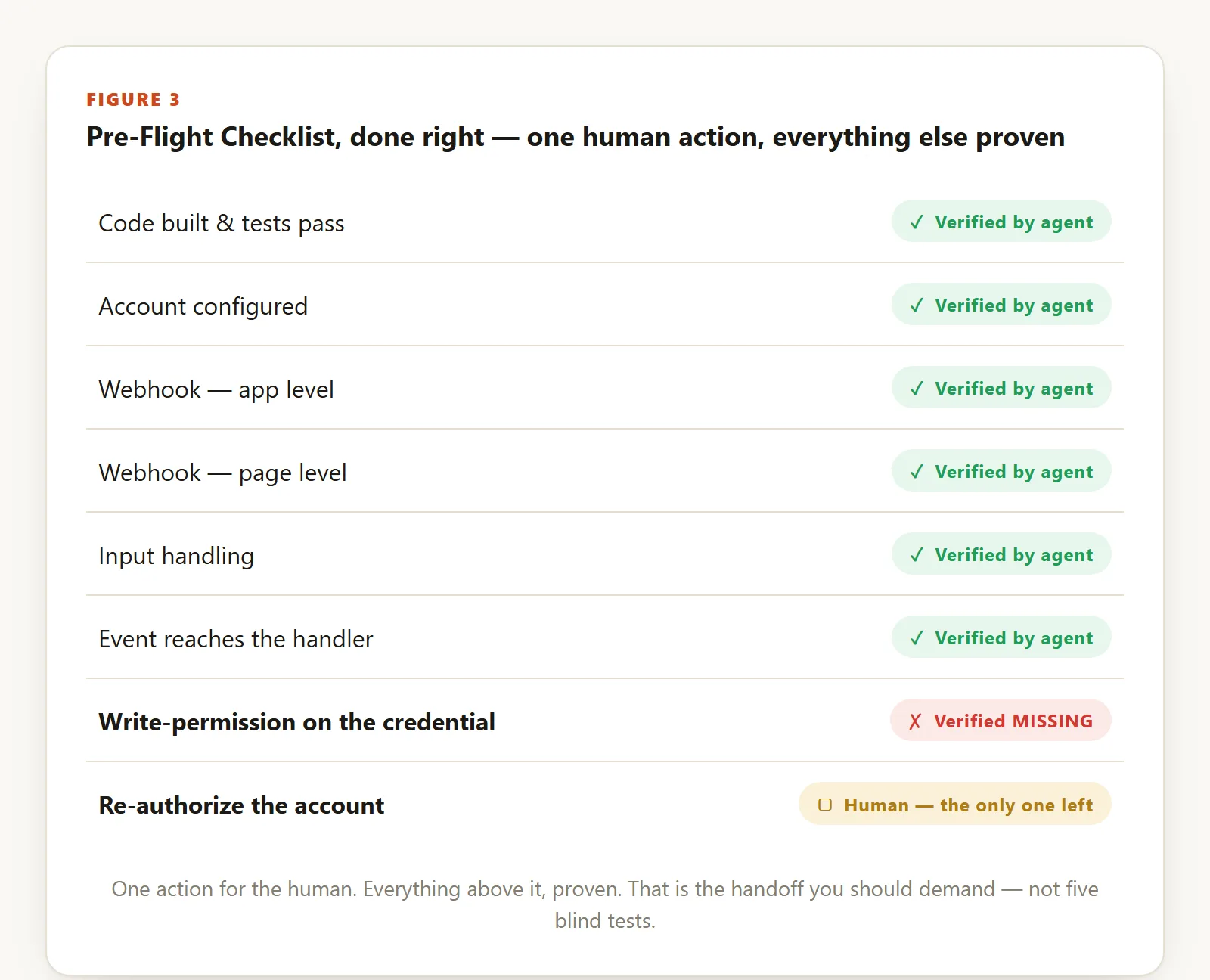
One action for the human. Everything above it, proven. That is the handoff you should demand — not five blind tests.
The gap between my wasted afternoon and that clean table is not intelligence. It is discipline — and discipline is precisely the thing you can put in writing.
Why this is the real skill of the AI-building era
We’re all being sold the idea that the winners of this era will have the most capable model or the cleverest prompt. I don’t buy it. Raw capability is converging and commoditizing at frightening speed. The durable edge is something quieter and far more human: how well you constrain, document, and operationalize your AI collaborator.
Treat your agent like what it actually is: a brilliant, fast, tireless junior with a specific set of blind spots and no long-term memory unless you give it one. You would never let a talented junior turn you into their debugger twice without a word — you’d write down the standard and expect it followed. Do exactly that here. The difference is that the AI actually follows the written standard, every time, forever.
The builders who win — solo founders and large teams alike — won’t be the ones with the smartest agent. They’ll be the ones with the best-documented one.
If you’re building with AI agents — solo founder or ten-person team — the highest-leverage hour you’ll spend this month isn’t on a better model or a sharper prompt. It’s writing down the one standard you’re tired of re-explaining, so your agent stops turning you into its debugger. That’s the whole discipline, and it compounds every session after.
At CushLabs, every AI assistant we put in front of a real customer is built on exactly this discipline — written operating rules and pre-flight verification, not “let’s see if it works.” If you’re putting AI agents into production and want to compare operating manuals, let’s talk. Trading the rules we each learned the hard way is the cheapest preventative medicine there is.
Keep reading
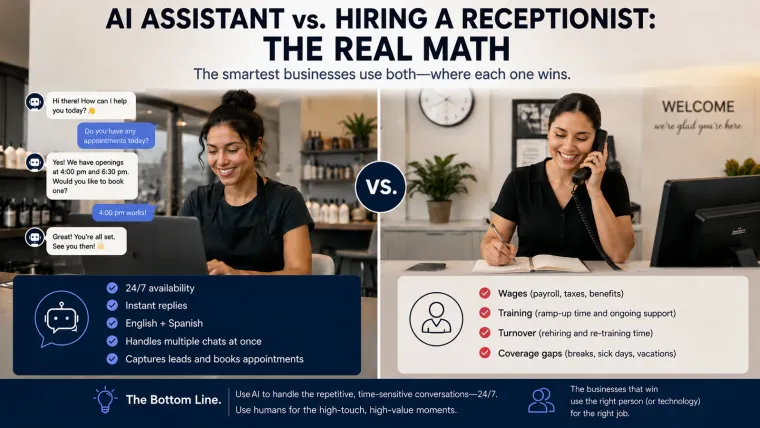
An AI Assistant vs. Hiring a Receptionist: The Real Math
Before you hire someone to answer messages, run the numbers. Here's what a front desk really costs, what it can't cover, and where an AI assistant actually fits.

How to Turn Facebook Messenger Into a Sales Channel
Most businesses treat Messenger as a support inbox. The ones growing fastest treat it as a sales channel. Here's the practical playbook for making the switch.