

Santa Tere: When the Whole Business Lives in the Owner's Head
By Robert Cushman

Santa Teresita doesn’t look like any other neighborhood in Guadalajara.
Founded around 1920, northwest of the historic center, it’s one of those places where the street is still alive at nine at night: the market, the taquerías, people who have been shopping at the same storefront since they were kids. Plenty of businesses in Santa Tere have been open for two or three generations.
And that’s exactly where the strength and the problem both live.
The owner is the system
In a neighborhood business, the person who knows everything is the owner.
She knows which sizes are left, which supplier runs late, that the woman who comes in on Thursdays always asks about the same thing, that the shop is on the avenue and not inside the plaza with the same name — and she repeats that ten times a week because people get it wrong.
None of it is written down. It lives in her head.
While she’s at the counter, it works. The trouble starts when the business also exists on Facebook and Instagram, where people ask at any hour.
The message nobody answered
A customer writes at 8:40 at night asking about hours.
Nobody replies, because the shop closed at 8:00 and the owner is having dinner. At 11 the next morning someone answers. By then that person has asked two other businesses and bought from whoever replied first.
You didn’t lose that sale on price, or on product. You lost it on timing.
And here’s the worst part: you never find out. No alert tells you a customer slipped away. They simply don’t come back.
What’s missing isn’t technology
Almost every business in the area already has a Facebook Page and an Instagram account. Customers are already writing. There’s no missing tool.
What’s missing is for the answers to live somewhere other than inside one person.
That’s the whole idea in a sentence: if the only copy of the information is in the owner’s head, the business only answers when the owner is free.
What the fix actually looks like
It doesn’t start with artificial intelligence. It starts with a list.
1. Write down the questions you always get. Open your messages and read the last fifty. Note what people ask. Four or five will emerge, not forty: prices, hours, location, availability, payment methods.
2. Write the answer you already give. Not a “professional” version — the one you genuinely copy and paste. That one is already tested on real customers.
3. Mark which ones are hard facts. Hours, addresses, prices, exchange policy. These don’t get improvised: they’re stored exactly and answered exactly.
4. Decide what an assistant does NOT answer. Complaints, sensitive cases, anything that needs human judgment. That goes to a person, and the assistant stays quiet.
5. Up to here, there’s still no technology. You have a document. That’s valuable even if you never automate anything: it’s what you hand to whoever you hire next.
The mistakes that cost money
Replying “someone will be with you shortly.” That’s a polite way to lose the customer. The answer has to solve something real, immediately.
Letting an assistant guess at prices. An invented price is worse than no reply. Hard facts get stored as exact data, not loose text.
Treating it as “putting a robot on it.” When you answer a message, the assistant has to step aside in that conversation. If it interrupts while you’re helping a customer, you’ve made the problem worse.
The short list
- Do you know your five most repeated questions?
- Are your answers written down, or do only you know them?
- What happens to a message that arrives at nine at night?
- Could anyone else in your business answer the way you do?
- How would you find out that a customer got tired of waiting?
If that last question has no answer, that’s the gap.
The next step
At CushLabs.ai we build assistants that answer those repeat questions on Instagram and in your Page’s Messenger, collect contact details, and alert you when someone is serious. You keep serving customers; the business stops going quiet.
The first session is barely about artificial intelligence. It’s about your business: what people ask you, what you answer, and the moment a sale goes cold.
Book a free consultation. No commitment, and you’ll leave with a clear next step even if we never work together.
Keep reading

Your Chapalita Boutique Doesn't Stop. Your Answers Shouldn't Either
You're with a customer and three messages come in. You reply when you can, and by then they've gone cold. Here's what the fix looks like for a small shop in Chapalita.
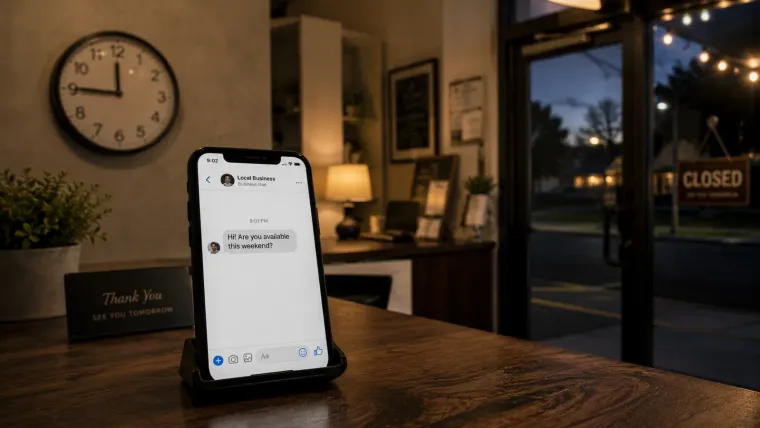
Why Your Business Loses Facebook Leads After 6 PM
Your best leads arrive when you're closed. Here's why the after-hours gap quietly costs local businesses the most — and the fix that answers in five seconds.
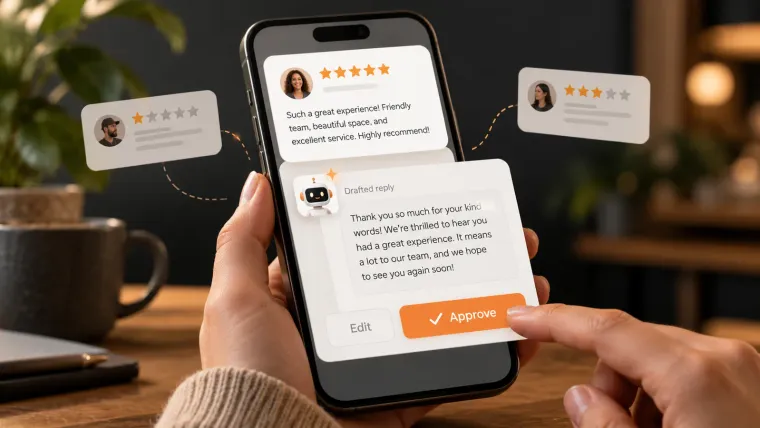
How to Reply to Google Reviews (With Examples), and When to Let AI Draft Them
Copy-ready replies for 5, 3 and 1-star Google reviews, what never to write, how to report a fake review, and how to ask for more reviews without breaking Google's rules.