

Your Chapalita Boutique Doesn't Stop. Your Answers Shouldn't Either
By Robert Cushman

Chapalita is a neighborhood of tree-lined streets, large houses and small storefronts.
Around the glorieta and along the avenues that cross it there are boutiques, studios, small practices and cafés, almost all run by one or two people. They aren’t chains. The owner is on the floor.
And that creates a very specific problem.
The message that arrives while you’re with someone
You’re with a customer who’s trying something on. A message comes in: “how much is it?”
You don’t answer — you’re with someone, and rightly so. Another one arrives: “do you have it in my size?” Also not. Two hours later, when you finally sit down, you answer all three.
Two of them don’t reply.
This isn’t a problem of organization or effort. It’s arithmetic: one person cannot be at the counter and on the phone at the same time, and both places have customers in them.
What’s actually slipping away
It’s worth doing this exercise before deciding anything.
Open your messages. Find the last ten customer questions. Next to each one, write two things: what time it arrived, and what time you replied.
That gap in the middle is where a sale goes cold.
Don’t change anything yet. Just look at the number. That number is where any conversation about your business would start, because it’s the one thing that isn’t up for debate: either the gap is small, or it isn’t.
Answering fast isn’t the same as answering better
Here’s the part that trips up a lot of owners.
The goal isn’t to write prettier replies. It’s for the reply to land while the person is still interested. In local retail the decision moves fast: whoever answers first usually gets the sale.
Facebook measures this and publishes it. If you average more than fifteen minutes, it takes away the “very responsive” badge your customers see before they even message you.
What gets automated and what doesn’t
This is the distinction between a system that works and a mess.
Automate what repeats and has an exact answer. Hours. Location. Payment methods. Whether there’s parking. Whether you carry extended sizes. Exchange policy. These are questions where inventing is unacceptable and where you already give the same answer every time.
Don’t automate what needs judgment. A complaint. An upset customer. Anything that depends on a specific size someone has to physically go check in the stockroom. That goes to a person — to you — and the assistant steps aside.
And this is the important one: when you step in to answer, the assistant goes quiet in that conversation. It doesn’t interrupt you, doesn’t talk over you, doesn’t tell the customer you’re already helping something different.
Five mistakes we’ve already seen
- Promising what you can’t deliver. If you don’t have the size, saying “yes we do” to save the sale costs you an angry customer and a review.
- Inviting people to call. It ties up someone on your team and almost always ends in “come by the shop” anyway. Invite them to the store directly instead.
- Loading prices as loose text. A price has to be an exact fact answered word for word, not something inferred.
- Having no human exit. Every conversation needs a door to a real person.
- Measuring likes. What matters is how many conversations ended with someone walking into your shop.
The short list
- How long do you honestly take to answer a message midweek?
- What happens to the ones that arrive after you close?
- Are your prices and hours written down somewhere, exactly?
- Do you know which question you get ten times a day?
- When you answer yourself, what stops an automation from talking over you?
The next step
At CushLabs.ai we build assistants that answer those questions on Instagram and in your Page’s Messenger, collect contact details, and alert you when someone is serious — even while you’re with another customer.
More time for your business. Fewer conversations left unanswered.
Book a free consultation. No commitment, and you’ll leave with a clear next step even if we never work together.
Keep reading

Santa Tere: When the Whole Business Lives in the Owner's Head
Some shops in Santa Teresita have been trading for three generations. The problem isn't a shortage of customers — it's that every answer lives with one person, and she can't be at the counter and on her phone at the same time.
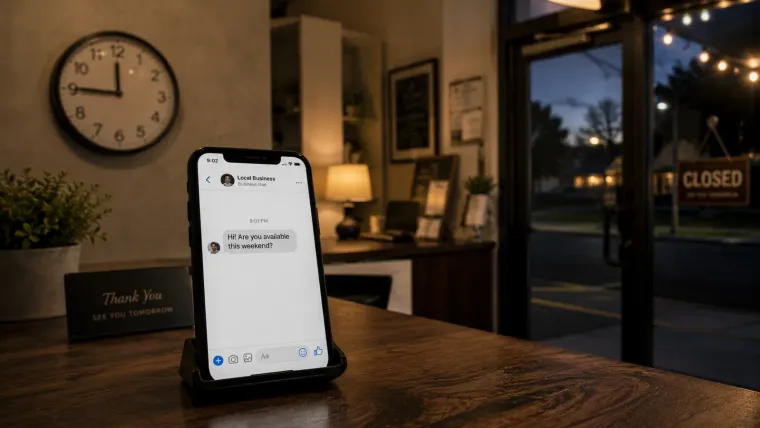
Why Your Business Loses Facebook Leads After 6 PM
Your best leads arrive when you're closed. Here's why the after-hours gap quietly costs local businesses the most — and the fix that answers in five seconds.
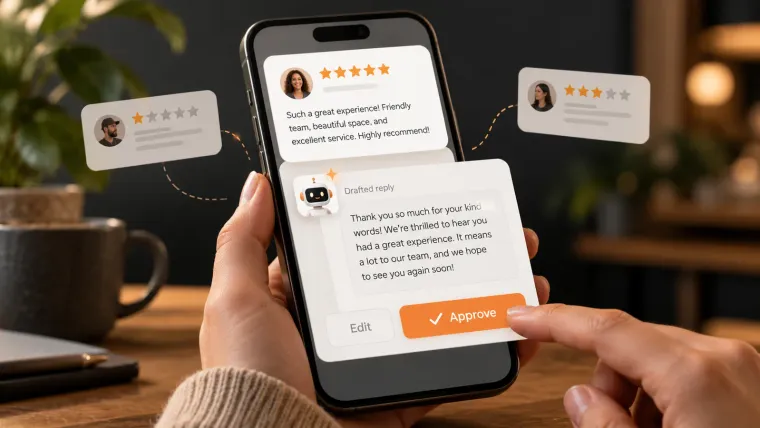
How to Reply to Google Reviews (With Examples), and When to Let AI Draft Them
Copy-ready replies for 5, 3 and 1-star Google reviews, what never to write, how to report a fake review, and how to ask for more reviews without breaking Google's rules.